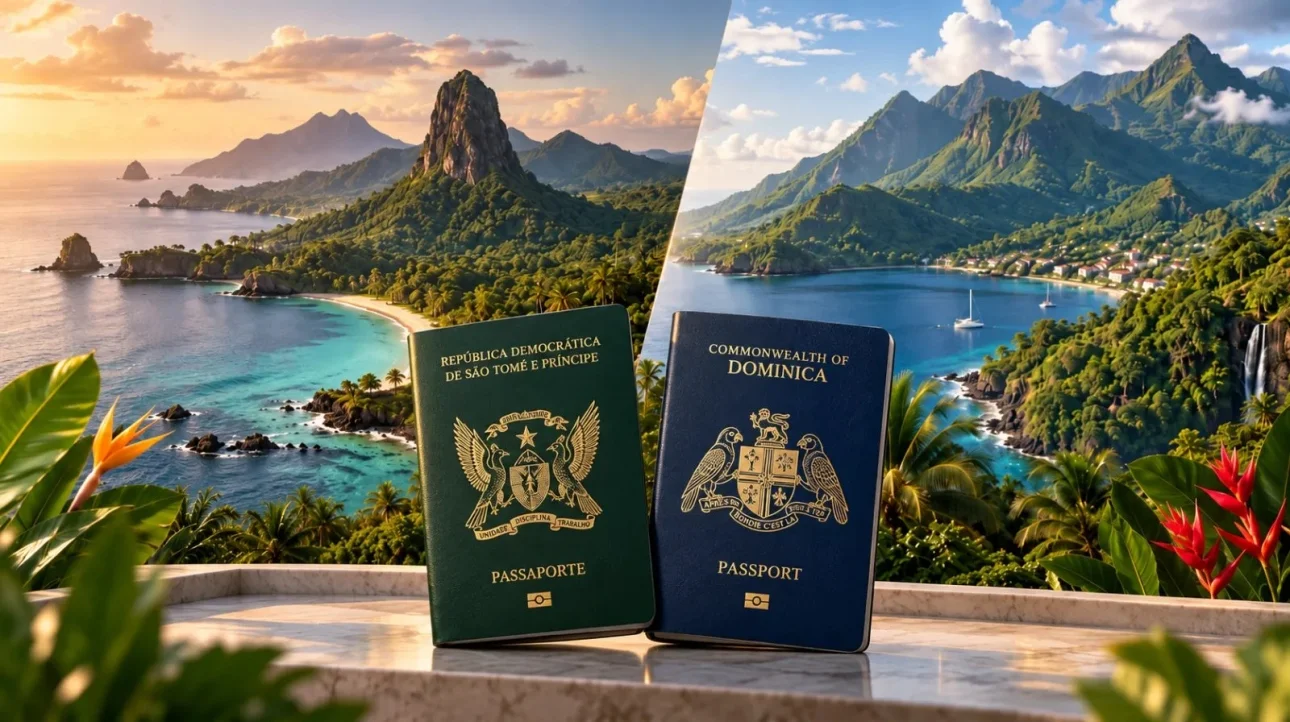
The best countries for a second passport depend on how you qualify and what you want the second citizenship to achieve. An investor who wants a direct route without years of residence may shortlist Caribbean citizenship-by-investment programmes. Someone with Irish or Italian ancestry may have a much stronger and cheaper route through descent. A family may prioritise dependant rules, while an entrepreneur may care more about US E-2 eligibility or business mobility. For someone focused almost entirely on travel freedom, a highly ranked European passport may be more attractive than the cheapest investment passport. There is therefore no single best country for a second passport in 2026. The right answer depends on mobility, cost, family composition, time, residence requirements, dual-citizenship rules and the legal route available to you.
Last updated: 13 October 2026. Citizenship laws, investment thresholds, visa agreements and passport rankings can change. All eligibility and programme figures should be reconfirmed before applying.
Best Second Passport Countries Compared
The table below is designed as a decision tool rather than a universal ranking.
| Country | Main Practical Route | Starting Cost / Requirement | Typical Time Structure | Residence Requirement | Family Potential | 2026 Mobility Indicator | Best For |
|---|---|---|---|---|---|---|---|
| Ireland | Descent / naturalisation | Documentation-based if eligible by ancestry | Depends on registration route | None for qualifying descent | Primarily individual eligibility through lineage | 186 destinations | Ancestry + top-tier mobility |
| Italy | Descent / marriage / naturalisation | Documentation-based if eligible | Case-dependent | None for qualifying descent | Family-line based | 186 destinations | Eligible Italian ancestry |
| Portugal | Naturalisation after residence | Residence-based, not direct passport purchase | 7 or 10 years depending nationality under 2026 law | Yes | Family residence pathways possible | 185 destinations | Long-term EU relocation |
| Dominica | Citizenship by investment | From US$200,000 | Several months | No standard residence requirement | Strong | 144 destinations | Lowest established Caribbean CBI entry |
| St Kitts & Nevis | Citizenship by investment | From US$250,000 | 120–180 days after acknowledgement | No mandatory residence for SISC | Strong | 157 destinations | Programme maturity + mobility |
| Grenada | Citizenship by investment | From US$235,000 | Roughly several months | No ordinary CBI residence requirement | Very broad | 148 destinations | Entrepreneurs considering US E-2 |
| Antigua & Barbuda | Citizenship by investment | From US$230,000 | Around several months | 5 days in first 5 years | Excellent | 154 destinations | Large families |
| Saint Lucia | Citizenship by investment | From US$240,000 | Around 90-day guideline | No general residence requirement | Strong | 143 destinations | Bonds + flexible investment routes |
Passport-access figures above use the 2026 Henley Passport Index methodology. Ireland and Italy currently provide access to 186 destinations without a prior visa, Portugal 185, St Kitts and Nevis 157, Antigua and Barbuda 154, Grenada 148, Dominica 144 and Saint Lucia 143.
The first decision is not “Which country has the strongest passport?” It is:
Which citizenship route can you legally and realistically use?
An Irish passport may be far stronger than a Caribbean passport, but it is irrelevant if you have no Irish descent and do not intend to naturalise there. Likewise, a Caribbean CBI programme may be more practical for an investor who wants citizenship without relocating for years.
Need a profile-based shortlist? Compare your ancestry, nationality, family structure, budget, residence tolerance and travel goals before choosing a country. A proper consultation should eliminate countries you cannot realistically qualify for before comparing costs.
What Makes a Country a Good Choice for a Second Passport?
A good second passport should solve a specific problem. Different applicants therefore define “best” differently.
Mobility
For some applicants, travel access is the main objective.
A stronger passport may reduce the number of traditional visas required for:
- Business travel
- Family visits
- Short holidays
- Regional mobility
- International conferences
But travel access changes. A passport should not be selected purely because of one visa agreement that could later be amended.
Eligibility Route
There are four broad ways people obtain a second citizenship.
Citizenship by Investment
The applicant qualifies through an approved contribution, real-estate purchase, bond or other prescribed economic route.
The main advantage is speed and limited residence requirements.
The main disadvantage is cost.
The established Caribbean citizenship by investment programs remain the clearest examples of direct investment-based citizenship.
Citizenship by Descent
Citizenship is claimed through a parent, grandparent or another legally recognised ancestral link.
For an eligible applicant, this can be one of the most attractive routes because no six-figure investment may be required.
Ireland allows eligible people born abroad to register in the Foreign Births Register where the required family connection exists.
Italy also recognises citizenship by descent, but major 2025 reforms narrowed eligibility for many people born abroad. Current rules require additional conditions, including in many cases a first- or second-degree ancestor who held only Italian citizenship, or a parent who met specified residence conditions in Italy.
This is why old “Italian citizenship through any distant ancestor” articles can now be misleading.
Citizenship by Naturalisation
A foreign resident lives legally in a country for the required period and later applies for nationality.
This usually requires:
- Actual residence
- Language ability
- Integration
- Clean criminal history
- Compliance with immigration rules
It can deliver a very strong passport but is not a fast “second passport” strategy.
Portugal illustrates how quickly these rules can change. Its May 2026 nationality reform now generally requires seven years of legal residence for nationals of EU or Portuguese-speaking countries and 10 years for most other foreign nationals.
Residence Leading to Citizenship
Some people first obtain permanent or long-term residence and only later naturalise.
Residence is not citizenship.
A permanent resident may live and work in a country but does not automatically receive the same:
- Passport
- Political rights
- Consular status
- Citizenship transmission rights
as a citizen.
For a deeper comparison, see citizen vs permanent resident before treating a residency programme as a second-passport programme.
Cost
Cost should include more than the headline investment.
A proper calculation may include:
- Main investment
- Government processing
- Due diligence
- Interviews
- Certificates
- Passport fees
- Dependants
- Legal and professional fees
- Property costs
- Opportunity cost of locked capital
This is particularly important when comparing cheapest second passport by investment options. The lowest advertised contribution may not produce the lowest total family cost.
Dual-Citizenship Compatibility
A second citizenship only works as intended if the relevant nationality laws allow you to retain your first citizenship.
Some countries broadly permit multiple nationality. Others restrict it.
Before applying, check both:
- Does the new country permit dual citizenship?
- Does your current country allow you to acquire another nationality without losing the first?
The dedicated guide to countries that allow dual citizenship should therefore be part of any second-passport decision.
Best Countries for Visa-Free Travel
If travel mobility is the primary goal, European citizenship remains difficult to beat.
Ireland
Ireland currently ranks among the world’s strongest passports, with access to 186 destinations without a prior visa under the Henley methodology.
For a person who already qualifies through ancestry, Ireland can therefore be one of the strongest combinations of:
- Low acquisition cost relative to CBI
- EU citizenship
- Broad international mobility
- No investment contribution
The problem is eligibility. It is not an open programme for unrelated foreign investors.
Italy
Italy also currently provides access to 186 destinations.
It allows multiple citizenship in principle, and acquiring another nationality does not normally cause automatic loss of Italian citizenship unless the person formally renounces it.
However, applicants relying on ancestry must now check the post-2025 rules carefully.
Portugal
Portugal remains highly attractive from a mobility perspective, with access to 185 destinations in the current index.
But it is no longer appropriate to present Portugal as a quick passport simply because someone obtains residence. Current 2026 naturalisation periods are significantly longer than under the previous framework.
Caribbean Mobility Leaders
Among the established Caribbean CBI passports, current Henley data places them in this order:
- St Kitts and Nevis — 157
- Antigua and Barbuda — 154
- Grenada — 148
- Dominica — 144
- Saint Lucia — 143
That does not make St Kitts automatically “best”. Mobility is only one part of the decision.
Best Second Passports for Families
Families should compare the programme as a household, not through the main applicant’s headline fee.
Antigua and Barbuda for Larger Families
Antigua becomes particularly interesting when six or more applicants are included.
Its UWI Fund currently requires US$260,000 for a family of six, inclusive of the standard processing structure for the initial group, with US$10,000 processing for each additional dependant.
Its dependant framework also accommodates:
- Spouse
- Dependent children up to age 30
- Parents and grandparents aged 55+
- Certain qualifying siblings
This makes Antigua one of the strongest options to evaluate for multigenerational families.
Grenada for Broad Dependant Eligibility
Grenada is also family-friendly.
Its NTF contribution starts at US$235,000 and can cover a family of four under the standard structure, with additional charges based on dependant type and family size.
Its family rules are broad enough to make it relevant to applicants including parents, grandparents and certain siblings.
St Kitts and Nevis for a Family of Four
St Kitts and Nevis currently applies a US$250,000 SISC minimum to a main applicant or family of up to four members. Additional dependants cost US$25,000 if under 18 and US$50,000 if 18 or older.
That structure can make it more competitive for families than its single-applicant headline price initially suggests.
Saint Lucia for Up to Four Applicants
Saint Lucia’s current NEF contribution is US$240,000 for an applicant with up to three qualifying dependants.
This makes the programme worth comparing against Grenada and St Kitts for a standard family of four.
There is therefore no universal best second passport for families. A couple with two young children can receive a very different cost ranking from a family including adult children and two dependent parents.
Best Options for Investors and Entrepreneurs
An investor should ask whether the citizenship is purely a mobility asset or part of a broader commercial strategy.
Grenada for US E-2 Planning
Grenada is the obvious Caribbean programme to assess when the applicant is interested in a future US E-2 Treaty Investor strategy.
Grenada is an E-2 treaty country with the United States.
That can create treaty-nationality eligibility after citizenship is obtained.
However, Grenadian citizenship does not guarantee E-2 approval. A separate US application must still satisfy:
- Substantial US investment
- Real and operating enterprise
- Capital at risk
- Ownership or control
- Non-marginality
- Current domicile rules for applicants who acquired treaty nationality through investment
Grenada should therefore be considered because of strategic eligibility, not because it offers an automatic US visa.
Saint Lucia for Capital-Preservation Strategy
Saint Lucia is distinctive because of its National Action Government Bond.
Current terms require:
- US$300,000 bond investment
- US$50,000 administration fee
- Five-year holding period
- No interest
The same US$300,000 bond amount currently applies to an applicant with any number of qualifying dependants.
This can suit applicants who prefer to lock capital temporarily rather than permanently contribute the full qualifying amount.
Real Estate Across the Caribbean
Investors who want an asset can also consider approved real estate.
Current minimums include:
- Dominica: US$200,000 plus government fees
- Grenada: from US$270,000 in qualifying structures plus US$50,000 government contribution
- Antigua and Barbuda: US$300,000
- St Kitts and Nevis: from US$325,000
- Saint Lucia: programme real-estate route available under current rules
Approved CBI property should never be treated as guaranteed-return real estate. Holding periods, fees, rental structure and resale liquidity matter.
Best Countries for Faster or Simpler Citizenship
Speed depends heavily on the route.
Descent Can Be the Simplest—If You Qualify
If your citizenship already exists legally through ancestry and only needs recognition or registration, a descent route may be financially simpler than CBI.
Ireland is a good example.
An eligible person born abroad may use the Foreign Births Register rather than purchase citizenship through investment.
The difficulty is proving the family chain.
Caribbean CBI Is Faster for Applicants Without Ancestry
For applicants with no useful ancestral claim and no desire to relocate for years, Caribbean CBI can be substantially faster than naturalisation.
Current programme benchmarks include:
- Saint Lucia: approximately 90 days under its published guideline
- St Kitts and Nevis: 120–180 days after acknowledgement
- Grenada: several months, depending on review
- Dominica: several months
- Antigua and Barbuda: generally several months
These are not guaranteed approval dates.
The easiest countries for second citizenship should therefore be evaluated by legal eligibility, not advertising claims such as “passport in 60 days”.
Caribbean Second Passport Options
The five established Caribbean programmes remain the most practical direct-citizenship category for applicants whose main qualification is investment.
Dominica
Dominica is currently the lowest-cost established Caribbean CBI for a single contribution applicant.
Current EDF pricing is:
- US$200,000 single applicant
- US$250,000 applicant + up to three dependants
- US$25,000 each additional dependant under 18
- US$40,000 each additional dependant aged 18+
Its strengths are:
- Low entry cost
- Long programme history
- No standard residence requirement
- Simple contribution or approved-property structure
Review the dedicated Dominica citizenship by investment guide before comparing final costs.
St Kitts and Nevis
St Kitts and Nevis operates the longest-established modern CBI programme in the Caribbean.
Its SISC currently starts at US$250,000 for a main applicant or family of up to four, with a 120–180-day published decision period.
Its main strengths are:
- Programme maturity
- Highest mobility among the five Caribbean CBI passports in the current Henley ranking
- Multiple investment options
- No mandatory residence under SISC
See St Kitts and Nevis citizenship by investment for the complete programme structure.
Grenada
Grenada’s NTF starts at US$235,000.
Its strongest differentiators are:
- Broad family inclusion
- US E-2 treaty nationality
- Contribution and approved-property routes
- No ordinary residence requirement for CBI
See Grenada citizenship by investment for the route-specific cost breakdown.
Antigua and Barbuda
Antigua’s NDF currently starts at US$230,000.
Its standout advantages are:
- Strong family rules
- UWI route for families of six+
- Approved real estate from US$300,000
The main post-citizenship consideration is the required physical presence during the initial citizenship period.
See Antigua and Barbuda citizenship by investment for family-specific pricing.
Saint Lucia
Saint Lucia’s NEF currently starts at US$240,000 for an applicant with up to three qualifying dependants.
Its distinguishing feature is investment variety:
- NEF
- Approved real estate
- National Action Government Bonds
- Approved enterprise structures
See Saint Lucia citizenship by investment for current investment-route comparisons.
For a side-by-side regional comparison, use the dedicated Caribbean citizenship by investment programs guide rather than repeating every fee table here.
How to Choose the Right Country for Your Goals
A useful second-passport decision follows a specific order.
1. Check Whether You Already Have a Descent Route
Before considering a US$200,000+ investment, investigate whether you qualify through:
- Parents
- Grandparents
- Birth registration
- Marriage
- Historic nationality
For an eligible person, a descent route may outperform any investment programme on both cost and passport strength.
2. Decide Whether You Are Willing to Relocate
If yes, naturalisation can open much stronger long-term passports.
If no, remove residence-heavy countries from the shortlist.
Portugal is a good example of why this matters. After its May 2026 reform, ordinary naturalisation now generally requires seven years for EU/CPLP nationals and 10 years for other nationalities.
3. Check Dual-Citizenship Compatibility
Do this before paying for legal work.
The country granting the second passport may allow dual citizenship while your original country does not.
Review countries that allow dual citizenship before assuming both passports can be retained.
4. Calculate the Family, Not the Main Applicant
Ask for a cost schedule showing:
- Every dependant
- Age
- Due diligence
- Contribution
- Passport fee
- Processing
- Interview
- Property or bond costs
This frequently changes the programme ranking.
5. Decide What the Passport Is For
If your priority is:
- Maximum mobility: investigate eligible European descent routes first.
- Fast investment citizenship: compare Caribbean CBI.
- Lower cost: Dominica deserves early consideration.
- Large family: Antigua may become more efficient.
- US E-2 strategy: assess Grenada.
- Recoverable capital: assess Saint Lucia bonds or approved property.
- Programme history: St Kitts and Nevis stands out.
6. Compare Citizenship With Residence
Do not buy a residence programme believing it gives an immediate passport.
Read citizen vs permanent resident before comparing residence-by-investment products against direct citizenship.
7. Avoid Choosing Only by Price
The cheapest second passport by investment is not automatically the best.
A lower-cost passport may provide:
- Less mobility
- Narrower family eligibility
- Fewer strategic benefits
- Different long-term compliance requirements
The best second citizenship is the one that matches the problem you are trying to solve.
Consultation CTA: Before choosing a country, build a shortlist based on your current nationality, ancestry, family ages, budget, travel priorities, willingness to relocate and business plans. A structured eligibility review can often remove unsuitable routes before you spend money on an application.
Frequently Asked Questions
What are the best countries for a second passport in 2026?
There is no universal winner. Ireland or Italy can be excellent for eligible ancestry applicants, while Dominica, St Kitts and Nevis, Grenada, Antigua and Barbuda and Saint Lucia are among the most practical direct investment options. Portugal is more relevant to applicants willing to pursue long-term residence and naturalisation.
What is the best second passport for global mobility?
Among realistic ancestry routes discussed here, Ireland and Italy currently rank very highly, each with access to 186 destinations without a prior visa. Among the five established Caribbean CBI passports, St Kitts and Nevis currently leads with 157.
What is the best country for a second passport by investment?
It depends on the applicant. Dominica is currently attractive for lower single-applicant cost, Antigua for large families, Grenada for E-2-oriented entrepreneurs, Saint Lucia for its bond option and St Kitts and Nevis for programme maturity.
What is the cheapest established Caribbean second passport?
Dominica currently has the lowest minimum contribution among the five established Caribbean programmes at US$200,000 for a single applicant. Additional fees still apply.
Which second passport is best for families?
There is no single answer. Antigua can be particularly attractive for six-person families through its UWI option, while Saint Lucia, Grenada and St Kitts can be competitive for smaller family groups.
Can I get a second passport through my grandparents?
Potentially. Ireland and Italy both provide ancestry-based citizenship pathways, but eligibility depends on the exact family chain and current nationality law. Italy’s rules became significantly more restrictive in 2025.
Can I buy an EU passport?
An ordinary EU passport should not be described as something you simply purchase. Countries such as Ireland and Italy provide citizenship through legal ancestry or naturalisation rules, while Portugal requires qualifying residence before ordinary naturalisation under current law.
How fast can I get a second passport?
Investment-based Caribbean citizenship can often be completed in months, subject to due diligence. Residence-based naturalisation can take many years. Descent cases depend on documentation and the relevant authority.
Can I keep my original citizenship?
Possibly, but both countries’ laws must permit it. Some states broadly allow multiple citizenship while others restrict or prohibit it. Check the rules before acquiring another nationality.
Is a second passport better than permanent residence?
Not necessarily. Citizenship generally provides a passport and fuller nationality rights, while permanent residence may be easier or cheaper to obtain. The better option depends on whether your objective is mobility, relocation, tax residence, business access or long-term citizenship.