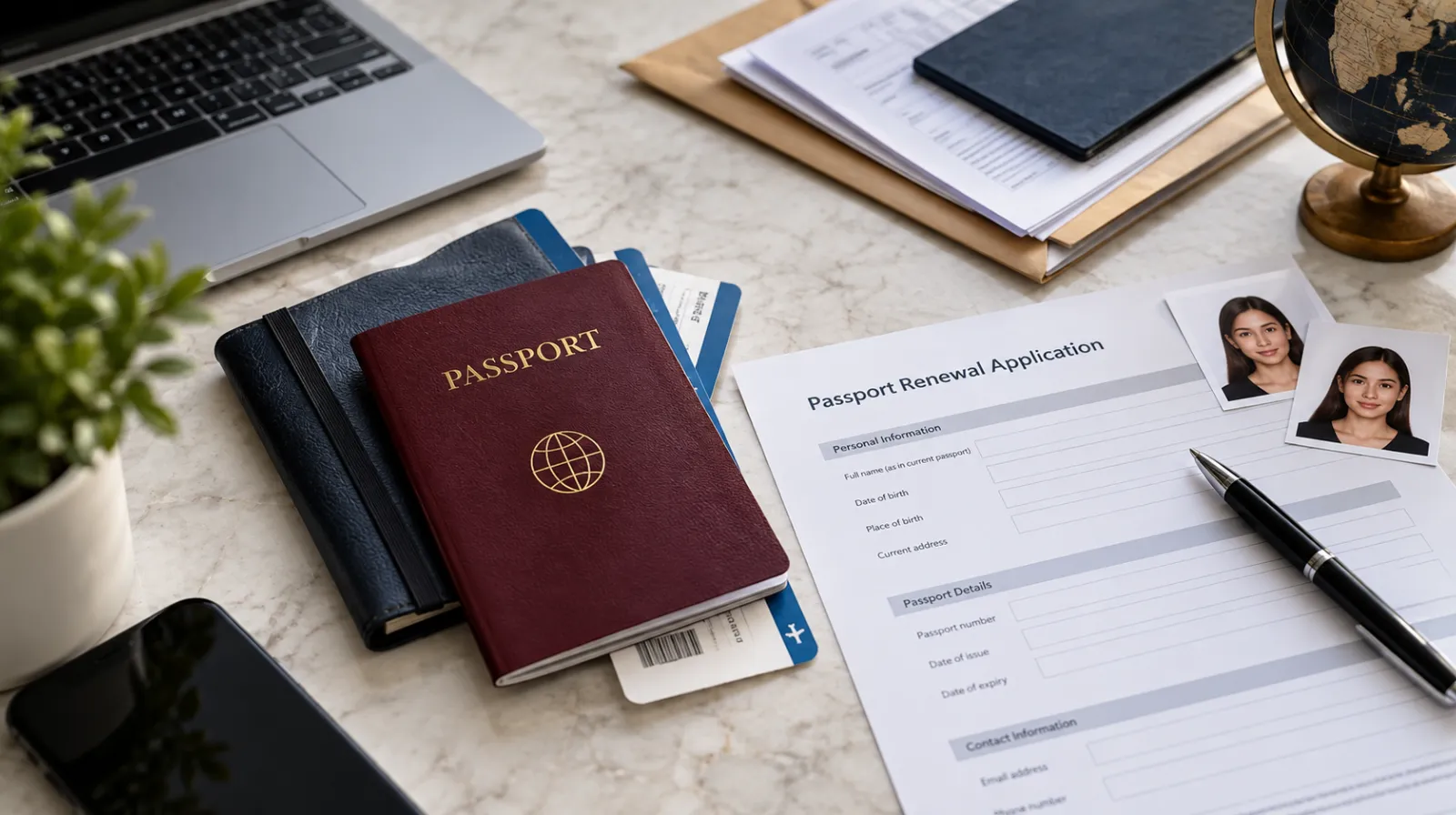
Obtaining St Kitts and Nevis citizenship by descent can be an attractive option for individuals who have a parent, grandparent or qualifying family connection to the Federation but do not want to use an investment route. Unlike citizenship by investment, this pathway is based on ancestry and legal connection rather than financial contribution.
For many applicants living abroad, citizenship by descent provides a way to reconnect with their family heritage and obtain official recognition as a citizen of St Kitts and Nevis. However, eligibility depends on specific constitutional rules, the generation through which citizenship is claimed, and the ability to prove the family relationship with official documents.
Applicants should also understand that citizenship by descent is different from St Kitts and Nevis citizenship by investment. The descent route does not require an investment contribution, but it may require stronger documentary evidence proving lineage.
Nationality rules, application forms, fees and document requirements can change. Before submitting an application, applicants should verify the latest requirements with the official authorities or approved legal professionals.
Key Takeaways
- St Kitts and Nevis citizenship by descent is based on ancestry rather than investment.
- Applicants generally need to prove a connection through a parent or qualifying grandparent born in St Kitts and Nevis.
- Birth certificates, citizenship certificates, marriage records and identity documents are central parts of the application.
- Citizenship by descent is different from citizenship by naturalization and citizenship by investment.
- Applicants who do not qualify through ancestry may need to explore other routes.
- Document accuracy is one of the biggest factors affecting processing times.
Who Qualifies for Citizenship by Descent?
Citizenship by descent allows individuals to claim nationality because they have a direct family connection to a citizen of St Kitts and Nevis.
The main principle is that citizenship is inherited through qualifying family relationships rather than obtained through residence or financial contribution.
According to the Ministry of Foreign Affairs of St Kitts and Nevis, citizenship by descent applies where the applicant’s parents or grandparents were born in the Federation.
In practice, applicants usually fall into one of these categories:
| Applicant Situation | Possible Route |
| Applicant has a parent born in St Kitts and Nevis | Citizenship by descent through parent |
| Applicant has a qualifying grandparent connection | Possible descent claim depending on constitutional rules |
| Applicant was born abroad to a St Kitts and Nevis citizen parent | Possible citizenship claim |
| Applicant has no ancestral connection | Another citizenship route may be required |
However, having a St Kitts and Nevis-born ancestor does not automatically guarantee citizenship.
Authorities review:
- The exact family relationship
- Dates of birth
- Citizenship status of the parent or grandparent
- Whether constitutional requirements are satisfied
- Whether required documents are available
St Kitts and Nevis Citizenship by Birth vs Citizenship by Descent
These two concepts are often confused.
Citizenship by birth generally relates to where a person is born and whether birth circumstances create a citizenship claim.
Citizenship by descent relates to citizenship inherited through parents or ancestors, even when the applicant was born outside St Kitts and Nevis.
For example:
- A child born in St Kitts and Nevis may have a citizenship claim through birth.
- A person born in another country to a St Kitts and Nevis citizen parent may apply through descent.
The correct route depends on the applicant’s personal circumstances.
Parent and Grandparent Eligibility Rules
The relationship between the applicant and the St Kitts and Nevis citizen ancestor is the foundation of the application.
Applicants should first identify:
- Who in their family was born in St Kitts and Nevis?
- Whether that person was a citizen at the relevant time?
- Whether citizenship can legally pass through that relationship?
Citizenship Through a Parent
The most straightforward cases usually involve a parent who is a citizen of St Kitts and Nevis.
Applicants may need to provide:
- Their own birth certificate
- Parent’s birth certificate
- Parent’s citizenship certificate or passport evidence
- Supporting identity documents
The purpose is to create a clear legal chain between the applicant and the citizen parent.
Citizenship Through a Grandparent
Grandparent-based applications require additional attention because generational rules can be more complex.
Official application documents request information about grandparents where citizenship is claimed through that connection. The forms require details such as:
- Grandparent’s name
- Place of birth
- Date of birth
- Residence information
Applicants should not assume that any grandparent connection automatically creates eligibility.
A common structure may involve:
Grandparent born in St Kitts and Nevis → Parent obtains citizenship → Child applies through parent
However, specific constitutional timing rules may affect eligibility.
In 2025, the Attorney General of St Kitts and Nevis highlighted that some descent claims involving grandparents depend on constitutional provisions and age-related requirements, particularly for persons applying through parents born abroad.
This means applicants should review their family timeline carefully before preparing documents.
Required Documents and Application Forms
The St Kitts and Nevis citizenship by descent application forms require applicants to provide evidence proving identity and family connection.
The exact requirements may vary depending on whether the applicant is an adult or minor, but common documents include:
| Document | Purpose |
| Applicant birth certificate | Confirms applicant identity and parent details |
| Parent birth certificate | Proves parental connection |
| Grandparent birth certificate (if applicable) | Supports ancestry claim |
| Citizenship certificate of parent | Confirms citizenship status |
| Marriage certificate | Explains surname or family relationship changes |
| Passport copies | Confirms identity |
| Police certificate | Background verification where required |
| Passport photographs | Identity documentation |
The official descent application instructions require original documents or certified copies, including relevant birth, marriage and citizenship documents.
Citizenship by Descent Application Forms
Applicants normally need to complete the official Citizenship by Descent application form provided through St Kitts and Nevis government channels.
The government provides separate forms and instructions for:
- Adult applicants
- Minor applicants
- Child applications
Forms typically require:
- Personal information
- Parents’ details
- Grandparents’ details where relevant
- Citizenship history
- Passport information
- Declaration and signatures
Incomplete forms are one of the most common reasons applications experience delays.
Document Authentication and Translation
Applicants living outside St Kitts and Nevis should pay close attention to document preparation.
Documents may require:
- Certification by authorised professionals
- Notarisation
- Legalisation or apostille depending on issuing country
- Certified English translation if documents are not originally in English
For example, official instructions for minor applications require foreign-language documents to be translated into English by a certified translator and properly certified.
Step-by-Step Application Process
The citizenship by descent process is primarily focused on proving eligibility rather than demonstrating investment capacity.
A typical application process includes the following stages:
Step 1: Confirm Eligibility
Before preparing documents, applicants should establish whether they qualify.
This involves reviewing:
- Parent or grandparent connection
- Birth locations
- Citizenship status of relatives
- Relevant constitutional provisions
A professional review can help avoid preparing an application that does not meet eligibility requirements.
Step 2: Collect Supporting Documents
Applicants should gather all evidence required to prove the family connection.
A typical document package may include:
- Applicant birth certificate
- Parent documents
- Grandparent documents if required
- Marriage records
- Passport copies
- Police certificates
- Photographs
The stronger the documentary chain, the easier it is for authorities to verify the claim.
Step 3: Complete the Application Forms
The applicant must complete the relevant Citizenship by Descent forms accurately.
Common mistakes include:
- Different spellings of names across documents
- Missing middle names
- Incorrect dates
- Missing signatures
- Unexplained surname changes
Where names differ between certificates, applicants may need additional evidence such as a deed poll or marriage certificate.
Step 4: Submit the Application
Applications are submitted through the appropriate government channel, embassy or authorised processing route depending on the applicant’s location.
The applicant should ensure:
- All forms are complete
- Documents are certified correctly
- Fees are paid correctly
- Copies and originals are provided where required
Step 5: Government Review
Authorities review:
- Identity documents
- Family relationship evidence
- Citizenship eligibility
- Background information
Additional documents may be requested if the application requires clarification.
Step 6: Receive Citizenship Confirmation
If approved, the applicant receives confirmation of citizenship and may then apply for a St Kitts and Nevis passport.
Citizenship approval and passport issuance are separate administrative steps.
Processing Time and Fees
The processing time for St Kitts and Nevis citizenship by descent depends heavily on how complete the application is and whether the authorities need to verify older birth, marriage or citizenship records.
Official guidance states that the citizenship certificate process can take up to six months. Passport issuance comes afterwards as a separate step.
For applicants living abroad, the exact application fee can vary depending on the diplomatic mission handling the file.
For example:
| Application Channel | Current Published Fee | Additional Costs |
| High Commission in London | £60 citizenship application fee | £50 per certificate requiring authentication + £75 FedEx forwarding fee |
| Embassy in Washington, D.C. | US$56 for standard descent application | Certification/notarisation costs may apply |
| Child whose parent obtained citizenship by investment | US$375 through Washington guidance | Additional documentation costs may apply |
The London High Commission also states that application fees are non-refundable where an application is unsuccessful or withdrawn.
The Washington Embassy currently lists a US$56 fee for standard citizenship-by-descent applications and a separate US$375 fee for a child application where the parent obtained citizenship through investment.
Important note: Do not assume that fees published by one embassy apply globally. Confirm the fee with the embassy, High Commission or government department that will process your application.
What Can Make Processing Faster?
Applicants can reduce avoidable delays by submitting a file that is easy to verify.
Before filing, check that:
- Every name is spelled consistently.
- Birth dates match across all certificates.
- Parent and grandparent relationships are clearly documented.
- Foreign-language records have certified English translations.
- Required documents are notarised or authenticated correctly.
- Police checks remain valid.
- Application forms are signed in all required places.
If a family line involves several generations, it is useful to build a simple document chain before applying:
Applicant → Parent → Grandparent born in St Kitts and Nevis
Every link in that chain should be supported by a civil-status document.
Citizenship by Descent vs Citizenship by Investment
Citizenship by descent and St Kitts and Nevis citizenship by investment are fundamentally different legal routes.
Descent is based on family connection. Citizenship by investment is based on making a qualifying investment and passing the programme’s due-diligence process.
| Factor | Citizenship by Descent | Citizenship by Investment |
| Main basis | Parent or grandparent connection | Qualifying investment |
| Investment required | No | Yes |
| Family evidence | Essential | Not the basis of eligibility |
| Source-of-funds review | Generally not comparable to CBI | Comprehensive |
| Authorised agent required | Not generally the same CBI structure | Yes |
| Typical cost | Relatively low administrative fees | From US$250,000 + fees |
| Processing | Can take up to 6 months | Separate CIU process |
| Best suited to | People with qualifying ancestry | Applicants without qualifying ancestry |
Source: stkittsnevishcuk.gov.kn
When Citizenship by Descent Is the Better Route
Use the descent route first if you have:
- A parent born in St Kitts and Nevis
- A qualifying grandparent born in the Federation
- Documentary evidence proving the family relationship
- A clear constitutional basis for the claim
If you qualify by descent, it would generally make little sense to pay hundreds of thousands of dollars for an investment route simply to obtain the same nationality.
When Citizenship by Investment Becomes Relevant
Citizenship by investment is relevant where:
- You have no qualifying St Kitts and Nevis ancestry.
- Your family connection does not meet the constitutional requirements.
- You want to obtain citizenship through an approved economic route instead.
The current investment programme includes:
- Sustainable Island State Contribution from US$250,000
- Public Benefit Option from US$250,000
- Approved development real estate from US$325,000
- Qualifying private real estate from US$325,000 for certain condominium interests or US$600,000 for qualifying private homes
CBI applicants must also pass due diligence and complete a mandatory interview. The main applicant currently pays a US$10,000 due-diligence fee, while dependants aged 16 or over generally attract a US$7,500 fee.
This is why the two pathways should never be mixed.
Writer’s note: If ancestry exists, verify descent eligibility before considering an investment application.
Citizenship by Descent vs Citizenship by Naturalization
Another route mentioned in official nationality guidance is citizenship by residence.
Official government information states that a person applying through residence must have lived legally in the Federation for 14 years.
That makes naturalisation very different from descent:
- Descent: based on ancestry
- Naturalisation/residence: based on long-term lawful residence
- Investment: based on a qualifying investment plus approval
Someone searching for St Kitts and Nevis citizenship by naturalization should therefore not use the descent application form unless they also independently qualify through ancestry.
Common Reasons for Delays
Most descent applications are not complicated because of financial requirements. They become complicated because the documentary evidence is incomplete, inconsistent or difficult to verify.
1. Missing Parent or Grandparent Records
A family claim cannot be confirmed if the relevant birth certificate is missing.
This is especially common where:
- The grandparent was born many decades ago.
- Records were issued under a different spelling.
- Birth registration occurred late.
- Original certificates were lost.
Applicants may need to request replacement civil-status records before applying.
2. Inconsistent Names Across Documents
Names are one of the most common sources of confusion.
For example:
- Birth certificate: John Michael Thomas
- Marriage certificate: John M. Thomas
- Passport: John Thomas
The difference may be harmless, but the authority still needs to confirm that all documents refer to the same person.
Name differences may require:
- Marriage certificate
- Deed poll
- Affidavit
- Official name-change documentation
The High Commission specifically notes that a name change made abroad does not automatically become recognised in St Kitts and Nevis unless it is formally registered where required.
3. Incorrect Certification
A photocopy is not automatically an acceptable certified copy.
Applications can be delayed if documents are:
- Not notarised correctly
- Certified by an unauthorised person
- Missing stamps
- Missing certification wording
- Submitted without originals where originals are required
The London High Commission currently asks applicants to submit originals plus photocopies.
4. Foreign-Language Documents
Documents in another language may need a certified English translation.
Do not submit your own translation or an informal translation unless the authority explicitly allows it.
The original-language document should normally accompany the certified translation.
5. Incomplete Application Forms
Simple form errors can stop the application from moving forward.
Common mistakes include:
- Missing signatures
- Incomplete grandparent details
- Blank fields
- Incorrect addresses
- Missing dates
- Failure to disclose previous names
Applicants should review the final form line by line before submission.
6. Expired Police Records
Adult applications may require criminal background documentation. The Washington Embassy currently lists a criminal background check among the descent application requirements.
If the police certificate expires before review, the authority may request an updated version.
7. Citizenship Status of the Parent Is Unclear
A parent being born in St Kitts and Nevis is usually strong evidence, but some cases involve:
- Parent born overseas
- Parent registered later
- Parent who obtained citizenship through investment, residence or marriage
These cases may require additional citizenship certificates rather than only birth certificates.
8. Applying Under the Wrong Citizenship Route
Someone may mistakenly file a descent application when the correct route is:
- Registration
- Marriage
- Residence
- Investment
Official guidance separates these categories clearly.
Using the correct route from the start can prevent months of unnecessary delay.
Practical Checklist Before You Apply
Before submitting a St Kitts and Nevis citizenship by descent application, confirm the following:
Eligibility
- Which parent or grandparent creates the claim?
- Were they born in St Kitts or Nevis?
- Can you prove the relationship?
- Does the relevant constitutional provision cover your situation?
Documents
- Applicant birth certificate
- Parent birth certificate
- Grandparent birth certificate if applicable
- Parent citizenship certificate if necessary
- Marriage certificates
- Name-change records
- Passport copy
- Police clearance where required
- Medical certificate where required
- Passport photographs
Document Quality
- Originals available where required
- Copies notarised correctly
- English translations certified
- Names match across records
- All dates match
- Documents remain valid
Submission
- Correct adult or minor form
- Correct fee for your diplomatic mission
- All signatures complete
- Correct payment method
- Contact details accurate
This checklist will not guarantee approval, but it can significantly reduce avoidable administrative problems.
Frequently Asked Questions
Can I get St Kitts and Nevis citizenship through my parents?
Yes, potentially. Official government guidance states that citizenship by descent may be acquired where a parent was born in the Federation. The applicant must prove the relationship through official records.
Can I get St Kitts and Nevis citizenship through my grandparents?
Potentially, yes. Official guidance also recognises citizenship by descent where a qualifying grandparent was born in St Kitts and Nevis. However, constitutional timing and generational rules can affect individual cases, so grandparent claims should be reviewed carefully.
What documents are required for St Kitts and Nevis citizenship by descent?
Common requirements include the applicant’s birth certificate, parent or grandparent birth certificates, passport copy, photographs, medical documentation and, for adult applications, a criminal background check. Additional documents may be requested depending on the family history.
Where can I get the St Kitts and Nevis citizenship by descent application forms?
Official adult and minor forms are available through the St Kitts and Nevis Embassy and High Commission websites.
How long does St Kitts and Nevis citizenship by descent take?
Official foreign-affairs guidance states that the citizenship certificate process can take up to six months. Passport processing begins afterwards.
How much does citizenship by descent cost?
Fees depend on where the application is submitted. The London High Commission currently lists a £60 application fee, while the Washington Embassy lists US$56 for a standard descent application. Certification, courier and other document costs may apply.
Is citizenship by descent the same as St Kitts and Nevis citizenship by birth?
No. Citizenship by birth relates to birth circumstances, while citizenship by descent is based on citizenship inherited through parents or qualifying ancestors.
Is citizenship by descent the same as naturalization?
No. Official guidance states that citizenship by residence requires 14 years of legal residence. Descent is based on ancestry and does not require the same long-term residence.
Do I need to invest to obtain citizenship by descent?
No. A genuine descent claim is based on ancestry, not investment. If you do not qualify through descent, St Kitts and Nevis citizenship by investment may be an alternative route.
Can a child of a citizenship-by-investment citizen apply by descent?
A separate child application route exists. Current Washington Embassy guidance lists a US$375 fee where the child’s parent obtained citizenship by investment, compared with US$56 for a standard descent child application.
Conclusion
St Kitts and Nevis citizenship by descent can be one of the simplest and least expensive ways to obtain citizenship if you have a qualifying parent or grandparent connection. The central task is not financial; it is documentary. Applicants must establish a clear legal link between themselves and the St Kitts and Nevis citizen or ancestor through reliable civil-status records.
Before applying, confirm:
- Your exact generation of eligibility
- Whether the qualifying ancestor was born in the Federation
- Which application form applies
- Which documents require notarisation or authentication
- The current fee at the mission handling your application
If ancestry does not create a valid claim, other routes exist, including citizenship through residence and St Kitts and Nevis citizenship by investment. These pathways have completely different eligibility criteria and should not be mixed with descent applications.
For the strongest application, establish the citizenship route first, then build a complete document chain before filing.