The number of countries that allow dual citizenship has increased significantly as migration, international families and cross-border investment have become more common. Today, citizens of countries such as the United States, United Kingdom, Canada, France and Germany can generally hold another nationality without automatically giving up their existing citizenship. Other countries take a more restrictive approach, allowing multiple nationality only by birth, marriage, government approval or other specific exceptions.
This distinction matters if you are naturalising abroad, claiming citizenship through ancestry or considering a second passport through citizenship by investment. A country may allow you to acquire its nationality while your existing country automatically withdraws yours. The rules therefore need to work on both sides.
There is also no single permanent answer to how many countries allow dual citizenship. Different databases count conditional regimes differently. One 2026 comparison estimates that roughly three-quarters of UN member states permit dual nationality in at least some circumstances, while stricter methodologies produce lower totals.
Nationality law changes regularly. The classifications below reflect information available in 2026, but they are educational rather than legal or tax advice. Always confirm the law of every country involved before acquiring, renouncing or relying on a nationality.
Key Takeaways
- Dual citizenship means two countries simultaneously recognise the same person as their citizen.
- Multiple citizenship can mean holding three or more nationalities; there is no universal international limit.
- The UK, US, Canada, France and Germany currently permit multiple nationality in broad circumstances.
- Countries such as the Netherlands and UAE allow it only in particular situations.
- China does not recognise dual nationality, while Japan requires people with multiple nationalities to make a nationality choice under its nationality legislation.
- India’s OCI scheme is not dual citizenship.
- Dominica, St Kitts and Nevis, Grenada, Antigua and Barbuda and Saint Lucia all recognise dual citizenship, making them relevant to applicants considering Caribbean investment citizenship.
- Tax, military-service, disclosure and passport-use obligations can continue even when dual nationality itself is legal.
What Dual Citizenship Means
Dual citizenship, also called dual nationality, exists when two countries legally regard the same individual as their citizen at the same time.
You might become a dual citizen through:
- Birth in one country to parents from another
- Citizenship by descent
- Marriage
- Naturalisation after residence
- Restoration of ancestral nationality
- Adoption
- A qualifying investment programme
Dual citizenship is not something granted by an international organisation. Each state independently decides who its citizens are and whether acquiring another nationality causes loss of the first.
This creates an important two-country test.
Suppose Country A allows its citizens to acquire another nationality. You then naturalise in Country B. If Country B also allows you to retain Country A citizenship, you can normally become a dual citizen.
If Country B requires renunciation, however, Country A’s liberal rule does not help.
Dual Citizenship vs Multiple Citizenship
People often ask, can you be a citizen of multiple countries?
Yes, potentially.
A person can legally hold three, four or even more nationalities if every country involved allows the arrangement. There is no global treaty that sets a maximum number of citizenships an individual can hold.
For example, someone could potentially acquire nationalities through:
- Citizenship inherited from one parent
- Citizenship inherited from another parent
- Birthright citizenship
- Later naturalisation
Whether all four can be retained depends entirely on the nationality laws involved.
Dual Citizenship Does Not Mean Identical Rights Everywhere
Having two passports does not mean you can always choose which nationality applies.
When you are inside a country whose citizenship you hold, its authorities may treat you only as their citizen.
A British-French dual national in France, for example, cannot automatically insist that French authorities treat them as British for consular purposes. Similar limitations apply to US dual nationals when they are present in their other country of nationality.
This distinction becomes important when considering:
- Arrest or legal proceedings
- Military obligations
- Entry and exit rules
- Family-law disputes
- Tax reporting
- Consular protection
Dual citizenship creates additional rights, but potentially additional obligations too.
Countries That Allow Dual Citizenship: Full Comparison Table
There is no universally agreed binary list because nationality laws frequently distinguish citizenship acquired at birth from citizenship acquired voluntarily by naturalisation.
The table below focuses on countries commonly researched by international families, expats and second-citizenship applicants. Statuses reflect 2026 government guidance and current comparative nationality-law research.
| Country | 2026 Status | Main Restriction or Consideration | Source Status/Date |
|---|---|---|---|
| United States | Generally allowed | Dual nationals must use US passport for US entry/exit | Official guidance updated 2025/26 |
| United Kingdom | Allowed | Other country must also permit it | Official guidance, 2026 |
| Canada | Allowed | Other nationality’s law still applies | Official guidance, Apr 2026 |
| Germany | Allowed | Broad multiple citizenship permitted since June 2024 | Official guidance, 2025/26 |
| France | Allowed | Multiple citizenship recognised | Official guidance updated 2026 |
| Ireland | Allowed | Multiple nationality generally permitted | 2026 comparison |
| Portugal | Generally allowed | Other country’s law may affect retention | 2026 comparison |
| Italy | Generally allowed | Acquisition route and ancestry rules require separate review | 2026 comparison |
| Belgium | Generally allowed | Citizenship acquisition rules still apply | 2026 comparison |
| Switzerland | Generally allowed | No general renunciation requirement from Swiss side | 2026 comparison |
| Sweden | Allowed | Multiple nationality permitted | 2026 comparison |
| Norway | Allowed | Multiple nationality permitted | 2026 comparison |
| Finland | Allowed | Multiple nationality permitted | 2026 comparison |
| Denmark | Allowed | Multiple nationality permitted | 2026 comparison |
| Australia | Allowed | Public-office restrictions may matter for dual nationals | 2026 comparison |
| New Zealand | Allowed | Existing nationality may still be affected by foreign law | 2026 comparison |
| Türkiye | Allowed | Dual nationality generally recognised | 2026 comparison |
| United Arab Emirates | Conditional | Available to nominated categories under specific rules | Official update Feb 2026 |
| Netherlands | Conditional | Renunciation generally required on naturalisation, with exceptions | Official update Jul 2026 |
| Spain | Conditional | Rules differ by nationality and route | Official update Apr 2026 |
| Austria | Highly restricted | Exceptions generally require specific legal grounds/approval | 2026 comparison |
| South Korea | Conditional | Multiple nationality allowed only in specified situations | 2026 comparison |
| Pakistan | Conditional | Permitted with specified countries/categories | Current nationality guidance |
| China | Not recognised | Chinese law does not recognise dual nationality | Official law republished Jul 2026 |
| India | Not allowed | OCI is not Indian citizenship | Current official guidance |
| Japan | Restricted | Multiple nationals are required to make a nationality choice | Current official guidance |
| Singapore | Generally not allowed for adults | Foreign citizenship generally must be renounced | Official 2026 documentation |
| Dominica | Allowed | Existing country’s rules must also permit retention | Official programme guidance |
| St Kitts & Nevis | Allowed | Original nationality must also permit dual status | Official Apr 2026 |
| Grenada | Allowed | Dual citizenship expressly permitted | Official programme guidance |
| Antigua & Barbuda | Allowed | Constitution protects dual nationality | Current constitutional framework |
| Saint Lucia | Allowed | Dual nationality recognised | Official programme guidance |
Several important changes explain why older articles can be inaccurate.
Germany, for example, fundamentally liberalised its nationality rules on 27 June 2024. German citizens can now generally acquire another nationality without losing German citizenship, and people naturalising as Germans can retain their previous citizenship from the German side.
The Netherlands illustrates the opposite problem. Dual nationality does exist there, but naturalising adults are generally expected to renounce their previous nationality unless an exception applies. Dutch citizens may also lose Dutch nationality after voluntarily acquiring another citizenship in some circumstances.
This is why simply labelling a country “yes” or “no” can be misleading.
Countries That Allow Dual Citizenship With Conditions
Conditional systems are the most complicated category because the answer can depend on how citizenship was acquired.
A country might tolerate dual nationality acquired automatically at birth but restrict voluntary naturalisation later.
Netherlands
The Netherlands recognises that dual citizens exist, but its policy actively limits multiple nationality.
As a general rule, an adult naturalising as Dutch must renounce other citizenships. Exceptions can apply, including certain cases involving marriage to a Dutch citizen, refugee status or situations where renunciation is legally impossible.
Existing Dutch citizens who voluntarily acquire another nationality can also automatically lose Dutch citizenship unless one of the statutory exceptions applies.
So the Netherlands should be classified as conditional, not simply as a country that freely allows dual citizenship.
United Arab Emirates
The UAE also requires careful interpretation.
Amendments introduced in 2021 allow selected foreign investors, scientists, professionals, inventors and other nominated individuals to obtain Emirati citizenship while retaining their original nationality.
This is not an open naturalisation programme. Candidates must fall within qualifying categories and citizenship is awarded through nomination by designated UAE authorities. Naturalised citizens must also notify the authorities if they later acquire or lose another citizenship.
Spain
Spain’s nationality framework contains special rules linked to the applicant’s existing nationality and route to citizenship.
Applicants from certain countries with historical or legal connections to Spain can receive different treatment from applicants of other nationalities. Naturalisation therefore needs to be evaluated on a case-by-case basis rather than describing Spain as universally permitting unrestricted dual nationality.
Japan
Japan is better described as restricted rather than completely incapable of producing dual nationals.
A child can acquire both Japanese and foreign citizenship automatically. However, Japanese nationality law requires people with multiple nationality to make a choice within prescribed time limits.
A Japanese citizen who voluntarily acquires foreign nationality can also lose Japanese nationality.
This distinction matters because “dual citizenship exists in Japan” and “Japan freely allows dual citizenship” are not equivalent statements.
India
India provides another common source of confusion.
The Overseas Citizenship of India programme offers eligible foreign nationals of Indian origin significant immigration privileges, but an OCI holder remains a foreign national, does not receive an Indian passport and does not acquire full political rights.
Official guidance explicitly states that OCI should not be understood as dual citizenship.
Singapore
Singapore generally does not permit adults to retain dual citizenship.
Current citizenship documentation requires new citizens to divest themselves of foreign nationalities, while official documentation also notes that children with another nationality must ultimately make a citizenship choice.
This is especially important for families because National Service obligations may also affect male Singapore citizens.
Caribbean Countries That Allow Dual Citizenship
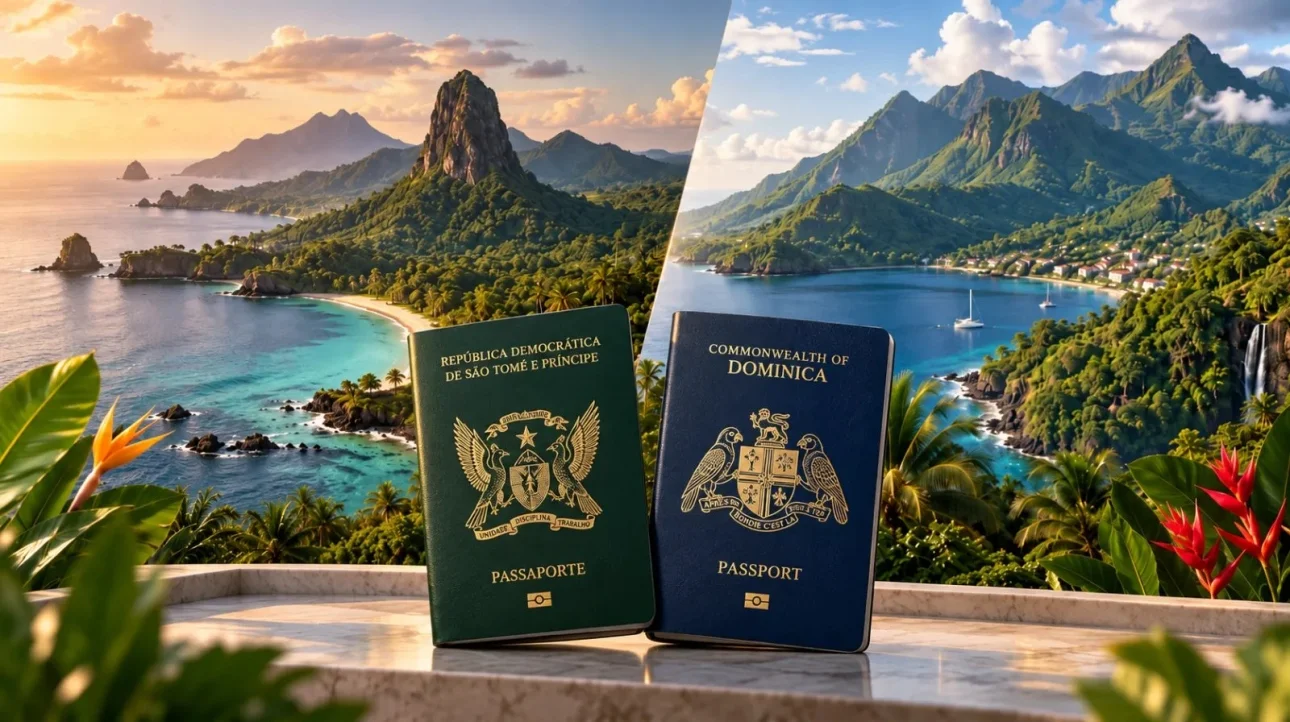
For readers researching a second passport, the Caribbean is particularly important because five countries combine legal recognition of dual nationality with established Citizenship by Investment programmes.
They are:
- Antigua and Barbuda
- Dominica
- Grenada
- St Kitts and Nevis
- Saint Lucia
Unlike countries that require an investor to abandon their original citizenship, these Caribbean jurisdictions permit successful applicants to retain another nationality from the Caribbean country’s perspective.
The applicant must still confirm that their original country permits the second citizenship.
Dominica
Dominica explicitly recognises dual citizenship.
Applicants who obtain Dominican citizenship are not required by Dominica to renounce their previous citizenship, and there is no residence requirement simply to maintain citizenship status.
This makes Dominica particularly relevant to:
- Investors seeking a second citizenship without relocation
- Families wanting to retain their existing nationality
- Applicants from countries that already recognise multiple citizenship
Dominica currently operates both a government-fund contribution route and an approved real-estate route under its citizenship by investment programme.
Internal-link opportunity: Dominica citizenship by investment programme page.
St Kitts and Nevis
St Kitts and Nevis also fully permits dual citizenship.
Official 2026 programme guidance confirms that applicants approved through its Citizenship Programme do not need to renounce their original nationality from the Federation’s perspective.
The country is particularly relevant because it has operated its investment citizenship framework since 1984.
Holding St Kitts and Nevis citizenship does not remove obligations attached to another citizenship. A US citizen, for example, remains subject to applicable US legal and tax obligations unless US citizenship itself is formally relinquished.
Internal-link opportunity: St Kitts and Nevis citizenship by investment programme page.
Grenada
Grenada’s official investment migration authority expressly confirms that the country allows dual citizenship.
Citizenship can also extend to qualifying family members, making the programme relevant to applicants building a multi-generational second-citizenship strategy.
From a dual-nationality perspective, the key benefit is structural simplicity: acquiring Grenadian citizenship does not require renouncing an existing citizenship under Grenadian law.
The original country’s rules still need to be checked independently.
Internal-link opportunity: Grenada citizenship by investment programme page.
Antigua and Barbuda
Antigua and Barbuda has particularly strong constitutional protection for dual nationality.
Its Constitution states that qualifying citizens cannot be deprived of citizenship, denied registration or required to renounce another nationality solely because they also hold citizenship elsewhere. It also protects the ability of dual citizens to hold another country’s passport.
This makes Antigua and Barbuda especially relevant to family applicants, alongside its existing investment citizenship framework.
There is, however, a separate physical-presence consideration for citizens admitted through the investment programme, so dual citizenship permission should not be confused with the programme’s other compliance requirements.
Internal-link opportunity: Antigua and Barbuda citizenship by investment programme page.
Saint Lucia
Saint Lucia also recognises dual nationality and markets its Citizenship by Investment Programme as a route through which applicants may maintain another citizenship where their existing country’s laws permit it.
It does not impose a standard permanent-residence requirement on investment citizenship applicants.
As with the other Caribbean options, the most important legal question is not simply:
“Does Saint Lucia allow dual citizenship?”
It is:
“Do Saint Lucia and my existing country allow me to hold both nationalities at the same time?”
Internal-link opportunity: Saint Lucia citizenship by investment programme page.
Caribbean Dual Citizenship Comparison
| Country | Dual Citizenship | Need to Renounce Existing Citizenship?* | Investment Citizenship Available | Main Dual-Nationality Advantage |
|---|---|---|---|---|
| Dominica | Yes | No | Yes | Straightforward retention |
| St Kitts & Nevis | Yes | No | Yes | Established programme |
| Grenada | Yes | No | Yes | Broad family use |
| Antigua & Barbuda | Yes | No | Yes | Strong constitutional protection |
| Saint Lucia | Yes | No | Yes | Flexible second-nationality structure |
*From the Caribbean country’s perspective. The applicant’s existing country may impose different rules.
For readers evaluating these programmes commercially, the next step should be a detailed comparison of dual citizenship rules alongside the cost, family eligibility and due-diligence requirements of each programme.
How Citizenship by Investment Affects Dual Nationality
Citizenship by investment does not create a special type of “lesser” citizenship.
Once a qualifying applicant is legally granted citizenship, they generally become a citizen under the relevant country’s nationality framework. What makes the process different is how citizenship is acquired, not necessarily the citizenship status itself.
However, investment citizenship raises three dual-nationality questions.
1. Does the CBI Country Allow Another Nationality?
All five established Caribbean CBI jurisdictions covered above do.
That means the new Caribbean citizenship itself generally does not require applicants to surrender a previous nationality.
2. Does Your Existing Country Allow You to Acquire the CBI Citizenship?
This is often the more important question.
For example:
- A British citizen can generally acquire another nationality while keeping British citizenship.
- A Canadian citizen can generally acquire a foreign citizenship and remain Canadian.
- A US citizen can naturalise elsewhere without automatically losing US nationality.
- A Chinese citizen faces fundamentally different rules because China does not recognise dual nationality.
Therefore, the same Dominican or Grenadian citizenship application can have completely different consequences depending on the applicant’s original nationality.
3. Do You Already Have More Than Two Citizenships?
A person with two nationalities considering a third must analyse all three legal systems.
There is no international maximum, but a single restrictive nationality can prevent the whole structure from working as intended.
Before starting a citizenship by investment application, the applicant should therefore verify:
- Retention of existing nationality
- Disclosure obligations
- Passport-use rules
- Military obligations
- Tax consequences
- Restrictions on public office or security-sensitive employment
Risks, Tax and Disclosure Considerations
Dual citizenship can increase flexibility, but it should not be treated simply as “having two passports”.
Tax Does Not Follow One Universal Dual-Citizenship Rule
Dual nationality does not automatically mean double taxation.
Most tax systems place significant weight on residence, income source and other connecting factors rather than passport ownership alone.
However, some citizenships can create continuing reporting obligations. US citizens, including dual nationals, remain subject to US tax-law obligations even while living abroad.
Before obtaining another citizenship, applicants with international income, companies, trusts or investments should obtain country-specific tax advice.
Citizenship planning and tax-residence planning are related, but they are not the same thing.
Passport Use Can Be Mandatory
Dual citizens cannot necessarily choose whichever passport is more convenient at every border.
US dual nationals must use a US passport to enter and leave the United States. Other countries can impose similar requirements on their own citizens.
A dual national should understand:
- Which passport to use when entering each country
- Whether the second citizenship must be disclosed
- Whether visas or ETAs can be issued to citizens
- Whether names and personal data match across passports
Consular Protection May Be Limited
If you are in the country of your second nationality, that government may regard you solely as its citizen.
Your other country’s embassy may therefore have limited ability to intervene. Both UK and US guidance explicitly warn dual nationals about this issue.
Military and Civic Obligations Can Continue
Some nationalities carry:
- Mandatory military service
- National Service
- Jury or civic duties
- Restrictions on political office
- Registration obligations
Singapore is a clear example where nationality status can interact with National Service requirements.
A second passport does not automatically cancel these duties.
Acquisition May Need to Be Reported
Some governments require citizens to notify them if they acquire another nationality.
The UAE, for example, requires qualifying naturalised citizens under its newer provisions to inform the competent authority if another nationality is acquired or lost.
Ignoring a disclosure requirement can create problems even where some form of dual nationality is permitted.
Renunciation Can Have Permanent Consequences
If a country requires you to renounce your nationality, consider what will be lost before acting.
Potential consequences include losing:
- Permanent right of residence
- Voting rights
- Passport entitlement
- Rights to certain public roles
- Automatic citizenship transmission to future children
Renunciation should therefore be treated as a legal decision, not a paperwork step.
Frequently Asked Questions
What countries allow dual citizenship in 2026?
Countries that broadly permit dual or multiple citizenship include the United States, United Kingdom, Canada, Germany, France, Australia and many European and Latin American countries. Dominica, St Kitts and Nevis, Grenada, Antigua and Barbuda and Saint Lucia also permit dual nationality. Exact rules depend on how citizenship is acquired.
How many countries allow dual citizenship?
There is no universally accepted number because countries with conditional rules can be classified differently. A 2026 global comparison estimates that roughly three-quarters of UN member states—more than 140 countries—permit some form of dual citizenship, while stricter lists count fewer.
Can you be a citizen of multiple countries?
Yes. It is possible to hold three or more nationalities when every country involved permits you to acquire and retain the others. There is no universal international cap on the number of citizenships a person can hold.
Does the United States allow dual citizenship?
Yes. US law does not require citizens to choose between US nationality and another nationality. A US citizen may naturalise in another country without automatically losing US citizenship, although US legal, tax and passport-use obligations continue.
Does Germany allow dual citizenship in 2026?
Yes. Since 27 June 2024, German law broadly allows multiple citizenship. German citizens can generally acquire another nationality without losing German citizenship, and people naturalising in Germany can retain an existing citizenship from the German side.
Which countries do not allow dual citizenship?
China does not recognise dual nationality. India does not offer dual citizenship and OCI is not citizenship. Singapore generally prohibits adult dual citizenship, while Japan requires multiple nationals to make a nationality choice under its nationality legislation.
Which Caribbean countries allow dual citizenship?
Dominica, St Kitts and Nevis, Grenada, Antigua and Barbuda and Saint Lucia permit dual citizenship. Each also operates a Citizenship by Investment programme, although applicants must confirm whether their original country permits them to retain their existing nationality.
Can citizenship by investment give me dual citizenship?
Potentially. If the investment country permits dual nationality and your current country also allows you to retain your original citizenship, you can normally hold both. Citizenship by investment does not override the nationality law of your existing country.
Does dual citizenship mean paying tax in two countries?
Not automatically. Tax liability may depend on residence, income source and, in some countries, citizenship. US citizens are a notable example because citizenship can create continuing federal tax and reporting obligations even for people living abroad. Professional tax advice is recommended for individual cases.
Can I lose my original citizenship by getting a second passport?
Yes. Some countries automatically withdraw citizenship when a citizen voluntarily acquires another nationality, while others require formal renunciation. Before applying for any second citizenship, confirm the law of your current nationality as well as the country granting the new citizenship.